
Have you ever noticed how someone’s outfit catches your attention before they even say a word? Fashion plays an important role in how we present ourselves to the world. The clothes we wear, the colours we choose, and the way we style ourselves can communicate our personality, confidence, and lifestyle.
Fashion is not just about following the latest trends or wearing expensive brands. It is about expressing who you are and feeling comfortable in your own style. Whether you are going to college, attending a job interview, meeting friends, or celebrating a special occasion, your appearance can help create a positive first impression.
But how exactly does fashion influence the way people perceive us? Let’s explore!
How Does Fashion Influence Your First Impression?
Introduction
Have you ever noticed how someone’s outfit catches your attention before they even say a word? Fashion plays an important role in how we present ourselves to the world. The clothes we wear, the colours we choose, and the way we style ourselves can communicate our personality, confidence, and lifestyle.
Fashion is not just about following the latest trends or wearing expensive brands. It is about expressing who you are and feeling comfortable in your own style. Whether you are going to college, attending a job interview, meeting friends, or celebrating a special occasion, your appearance can help create a positive first impression.
But how exactly does fashion influence the way people perceive us? Let’s explore!
Why Does First Impression Matter?
First impressions are often formed within the first few moments of meeting someone. During this time, people may notice your appearance, body language, facial expressions, and overall presentation.
Your outfit is one part of that first impression. Wearing clean, well-fitted, and occasion-appropriate clothes can help you appear confident and prepared.
For example, wearing formal clothing for a job interview may communicate professionalism, while a relaxed and casual outfit can be perfect for meeting friends. The key is to choose clothes that suit the occasion while allowing your personality to shine.
Remember: Your clothes may create the first impression, but your behaviour and attitude help shape the lasting one.
How Does Fashion Reflect Your Personality?
Fashion is a simple way to express your individuality. Different people have different preferences, and your personal style can reveal something about your taste and character.
Here are a few examples:
- Minimalist style: Simple outfits, neutral colours, and clean designs create a neat and timeless look.
- Casual style: Comfortable jeans, T-shirts, and sneakers reflect a relaxed everyday approach.
- Traditional style: Ethnic wear such as sarees, kurtas, and lehengas celebrates culture and tradition.
- Professional style: Formal shirts, trousers, blazers, and elegant dresses create a polished appearance.
- Trendy style: Experimenting with modern designs, accessories, and colours allows you to express creativity.
You do not need to follow every fashion trend to look stylish. The best style is one that feels authentic to you.
Can Fashion Boost Your Confidence?
Absolutely! Wearing an outfit that makes you feel good can positively influence your confidence.
Imagine wearing your favourite outfit to an important event. You feel comfortable, your posture improves, and you feel more prepared to interact with others. This is one way fashion can support your confidence.
However, confidence does not come from expensive clothes or branded accessories. It comes from feeling comfortable with yourself and being able to express your personality without constantly worrying about what others think.
A simple outfit worn with confidence can make a stronger impression than an expensive outfit worn uncomfortably.
The Role of Colours in Fashion
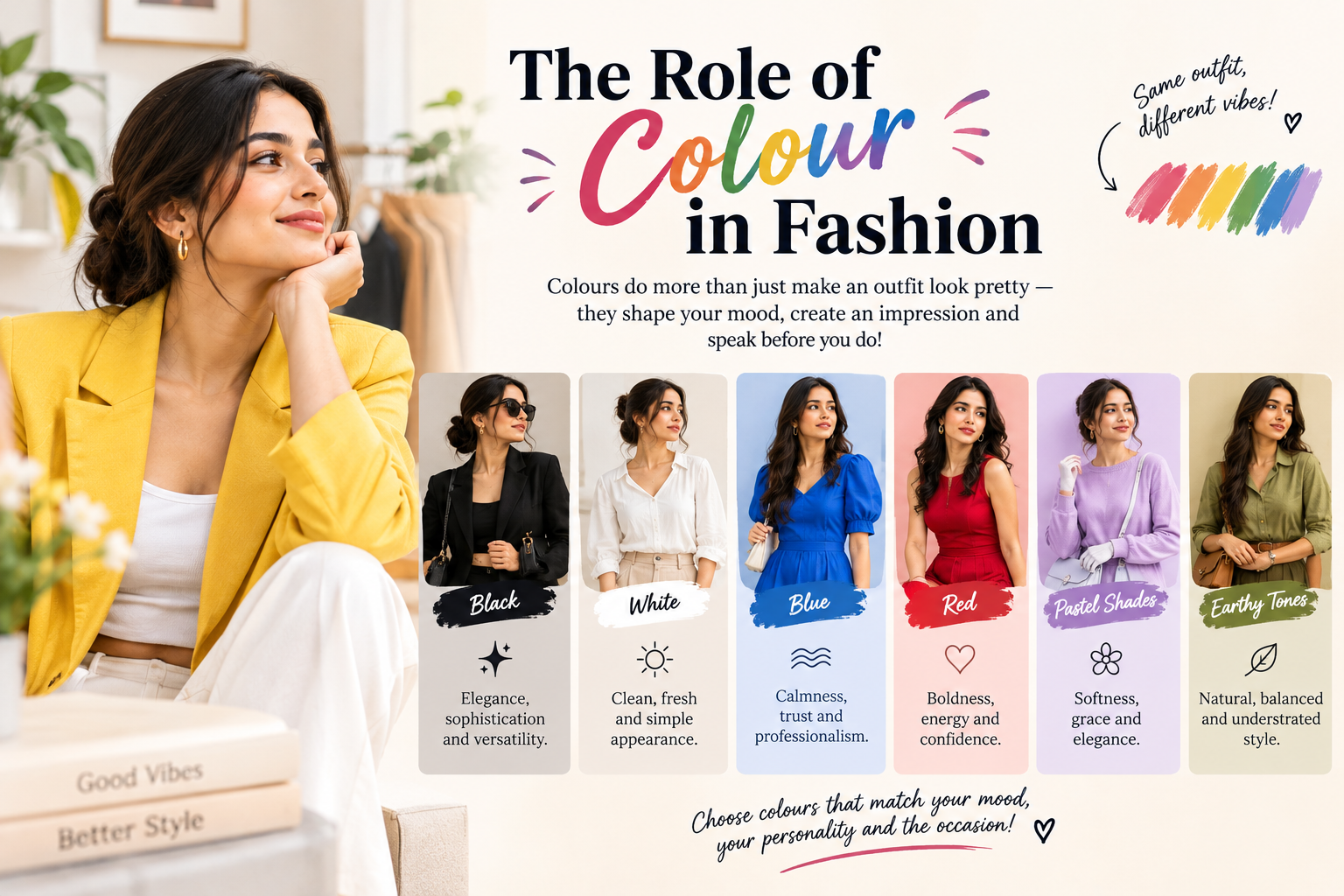
Colours can influence the overall appearance and mood of an outfit. Choosing colours that complement each other can help create a balanced and attractive look.
Here are some popular colour choices and the impressions they may create:
- Black: Often associated with elegance, sophistication, and versatility.
- White: Creates a clean, fresh, and simple appearance.
- Blue: Frequently associated with calmness and professionalism.
- Red: Can create a bold, energetic, and eye-catching look.
- Pastel shades: Often give outfits a soft, gentle, and elegant appearance.
- Earthy tones: Such as beige, brown, and olive can create a natural and understated look.
Of course, colours do not communicate the same thing in every situation. Your outfit, personal preferences, and the occasion all influence the overall impression.
Simple Styling Tips to Make a Great First Impression
Looking stylish does not require a complete wardrobe makeover. A few thoughtful choices can make a difference.
Choose the Right Fit
Clothes that fit comfortably and suit your body proportions generally look more polished than outfits that are too tight or too loose.
Dress for the Occasion
Choose your outfit according to where you are going. College, the workplace, a party, and a wedding may each call for a different style.
Keep Your Outfit Neat
Clean clothes, wrinkle-free fabrics, and well-maintained footwear can make your overall appearance look more put together.
Accessorize Smartly
A watch, handbag, belt, earrings, or simple necklace can enhance an outfit. You do not need too many accessories to look fashionable.
Pay Attention to Grooming
Personal hygiene, neat hair, and clean footwear contribute to a well-presented appearance.
Prioritize Comfort
When you feel comfortable in your clothes, it is often easier to move naturally and interact confidently with others.
How to Dress for Different Occasions?
The right outfit depends on the situation. Here are some simple ideas to help you choose your look.
For College: Jeans, comfortable tops, kurtis, sneakers, and simple accessories are practical options for everyday style.
For Job Interviews: Formal trousers, shirts, blazers, or other neat, professional outfits can help you look prepared and confident.
For Parties: Experiment with stylish dresses, coordinated outfits, statement accessories, or fashionable ethnic wear.
For Weddings and Festivals: Sarees, lehengas, kurta sets, and other traditional outfits offer opportunities to celebrate culture while expressing personal style.
For Everyday Outings: Comfortable jeans, casual tops, dresses, or coordinated sets can create an effortless look.
The goal is not to dress perfectly every time. It is to choose an outfit that suits the occasion and makes you feel good.
Can You Look Fashionable on a Budget?
Yes! Fashion is not about how much money you spend; it is about how creatively you style what you already own.
Here are a few budget-friendly fashion tips:
- Build your wardrobe around versatile basics.
- Mix and match existing clothes to create new combinations.
- Choose accessories that work with multiple outfits.
- Explore affordable local stores and seasonal sales.
- Take good care of your clothes so they last longer.
- Avoid buying every new trend and focus on styles you genuinely enjoy.
For example, a simple white shirt can be paired with jeans for a casual look or formal trousers for a more professional appearance. One piece of clothing can create multiple styles with the right combinations.
Great style is not about having more clothes; it is about making the most of what you have.
Is Fashion More Important Than Personality?
Fashion can help you make a positive first impression, but it does not define your complete personality.
A stylish appearance may attract attention, but kindness, communication, honesty, respect, and a positive attitude help build meaningful relationships.
Someone wearing simple clothes can leave a wonderful impression through their confidence and behaviour. Similarly, an expensive outfit cannot replace good manners or genuine communication.
Fashion should be a way to express yourself, not a way to judge others. Everyone has different tastes, budgets, cultures, and comfort levels, and all of these deserve respect.
The most memorable people are often those who combine personal style with authenticity and kindness.
Conclusion
So, how does fashion influence your first impression? It helps communicate your personality, supports self-expression, and can make you feel more confident in different social and professional situations.
You do not need expensive brands, a perfect wardrobe, or the latest trends to look good. Start with clothes that fit well, colours you enjoy, simple accessories, and a style that feels natural to you.
Fashion is not about becoming someone else to impress people. It is about presenting the best version of yourself while staying true to who you are.
Wear what makes you feel confident, express your unique personality, and remember that your best style is the one that feels like you.
Frequently Asked Questions (FAQs)
1. How does fashion influence your first impression?
Fashion influences the way people initially perceive your appearance and personal presentation. Choosing neat, comfortable, and occasion-appropriate clothing can help create a positive first impression.
2. Do expensive clothes make a better impression?
No. Expensive clothes are not necessary to look stylish. Clean, well-fitted clothing and thoughtful styling can create an attractive appearance on any budget.
3. How can I improve my personal fashion style?
Experiment with different outfits, colours, and accessories. Pay attention to what makes you feel comfortable and confident, and develop a style that suits your lifestyle.
4. Can fashion improve confidence?
Wearing clothes that you enjoy and feel comfortable in may help you feel more confident. However, confidence also develops through self-acceptance, experience, and positive behaviour.
5. What should I wear to make a good first impression?
Choose clean, well-fitted clothes that suit the occasion. Combine them with appropriate footwear, simple accessories, and neat grooming.